


One of the most important tools involved in project management is the Responsibility Assignment Matrix. It assists in indicating duties and task delegation among the workers, a feature that enhances efficient tasks and resource use. RACI is an abbreviation of the roles that people play within a project: Responsible, Accountable, Consulted, and Informed. This matrix plays a key role in planning resources for a project, especially in organizations that have structures supporting cross-functional teams that require a very clear definition of accountabilities. Separating tasks into those the individual project team members are responsible for or accountable to allows the project manager to avoid confusion and successfully coordinate project implementation.
Responsibility assignment matrix introduction
A RAM which is often referred to as a RACI matrix is an essential tool applied in project management to define and describe responsibilities.

This identifies cross-functional teams for a project and assigns each team member a RACI matrix role of Responsible, Accountable, Consulted, or Informed. This assignment matrix is very important in resource planning because it aids in managing tasks and resources. Clear identification of roles reduces conflicts and misunderstandings. This strength helps the project manager steer the project to success.
Responsibility assignment matrix definition and purpose
RAM is an acronym for Responsibility Assignment Matrix and is widely employed in project management to detail responsibility allocation among members. It provides a physical representation of the jobs assigned to each member, discourages slacking, and enhances cross-functionality. RAM is applied equally in project resource planning, resource management, and task management.
The most widespread model is the RACI model, an acronym for Responsible, Accountable, Consulted, and Informed. This matrix specifies project manager and team members' tasks, with each task allocated to the person who is:
- Answerable for the accomplishment of the task
- Responsible for its success
- This should be sought before making any particular decision or implementing any action.
- Is informed of the progress of the decision.
Importance of responsibility assignment matrix in project management
RAM or Responsibility Assignment Matrix is extensively used in project management to define responsibilities, which are especially useful for cross-functional teams. Also referred to as a RACI Matrix, this tool is very helpful for resource management in construction projects and resource planning in general. The framework defines who is Responsible, Accountable, Consulted, and Informed at every stage of the process and facilitates task management.
These assignment matrices help reduce confusion and increase team members' understanding. RAM assists the project manager in communicating what and when tasks should be done. It helps avoid overworking valuable resources and addresses possible gaps in the project delivery plan.
Components of responsibility assignment matrix
The RACI matrix, frequently known as the Responsibility Assignment Matrix, is a significant tool in project management. It contributes to accomplishing goals by defining how responsibilities are distributed among cross-functional teams. A RACI matrix categorizes team members into four categories:
- Responsible: immediately execute the task
- Accountable: supervises the task's performance
- Consulted: can suggest the task
- Informed: is enlightened on the status of the given task
Task management and resource scheduling for a project can highly be determined by an efficient and correctly developed assignment of a task matrix.
Roles in responsibility assignment matrix
RAM, or the Responsibility Assignment Matrix, is one of the most important factors to consider during a project. The application of RACI makes it easier to determine each team member's roles and responsibilities, providing great value in resource management and practical resource planning. RACI is an acronym defining Responsible as the person who performs the work; Accountable as the person who makes the decision; Consulted as those involved in decision-making but who do not make the final decision; and Informed as people updated on the process and results. These roles align cross-functional groups and help manage team work within the RAM environment. This reduces confusion among team members and enables the project manager to track project progress.
Tasks in responsibility assignment matrix
In project management, the RACI matrix is useful for project managers to assign tasks and define responsibilities for subordinates. RACI stands for Responsible, Accountable, Consulted, and Informed—each describing an individual's level of responsibility for a specific task. Two aspects of resource management it supports are project resource planning and resource allocation. When implemented properly, the RACI matrix prevents confusion within cross-functional teams. This optimizes general management and coordinated project execution.
Responsibility levels in responsibility assignment matrix
In project management, the RACI matrix is one of the techniques that is used in the determination of relationships and accountability in task management. This assignment matrix is generally applied to identify and specify the degree of accountability of team members across teams most commonly cross-function ones. Specifically, it aids in identifying who is Responsible for a function, who is Accountable for a function, who should be Consulted, and who should be Informed. Providing allocation of these roles assists in project resource planning and also in the management of available resources. The project manager has a duty of establishing the RACI matrix and making sure that all the team members understand the responsibility levels for various tasks as well as guaranteeing the adequate designation and tracking of duties in the teams.
Core roles in a responsibility assignment matrix
Understanding the role of the responsible party
The responsible party is the individual or team who actually completes the task or deliverable. This role carries the primary accountability for doing the work and ensuring it meets project standards. In a responsibility assignment matrix (RAM), clearly identifying who is responsible prevents confusion and overlapping efforts.
For example, in a freelance web design project, the responsible party might be the designer creating the website layout. Using tools like Trello or Asana, you can assign tasks explicitly to the responsible person, which helps track progress and deadlines in real time.
To apply this effectively, always confirm the responsible party has the skills and resources needed before assigning the task. This reduces delays and improves quality, especially when managing multiple clients or projects simultaneously.
The role of the accountable person
The accountable person is the one who owns the outcome of the task and ensures it is completed satisfactorily. Unlike the responsible party, the accountable role typically belongs to a project manager or business owner who approves the work and makes final decisions.
For instance, a small business owner overseeing a marketing campaign might be accountable for approving content created by freelancers. In 2024, using project management software such as Monday.com or ClickUp allows you to set accountability clearly, with notifications and approval workflows built in.
To use this role effectively, assign accountability to only one person per task to avoid confusion. This clear ownership helps maintain project momentum and ensures quality control throughout the project lifecycle.
Supporting roles: consulted and informed
The consulted role includes individuals who provide input or expertise before a task is completed. These stakeholders contribute knowledge but do not perform the work directly. The informed role includes those who need updates on progress or outcomes but are not involved in decision-making.
For example, in a freelance app development project, a client might be consulted to approve design choices, while the finance team is informed about budget status. Tools like Slack or Microsoft Teams help keep consulted and informed parties engaged through targeted communication channels.
To keep projects running smoothly, establish clear communication plans for these roles. Regular updates and feedback loops prevent misunderstandings and ensure everyone stays aligned with project goals and timelines.
RACI alternatives and variations
Understanding the DACI matrix
The DACI matrix is a popular alternative to the RACI model that clarifies decision-making roles. DACI stands for Driver, Approver, Contributor, and Informed. This model emphasizes who drives the task forward and who has final approval. It can reduce confusion in projects with multiple stakeholders.
For example, in a small marketing agency, the project manager acts as the Driver, the client or agency director is the Approver, team members provide input as Contributors, and other departments are kept Informed. Tools like Monday.com and Asana support DACI templates to help freelancers and small teams assign these roles clearly.
To use DACI effectively, start by listing all tasks and then assign each role explicitly. This approach helps prevent bottlenecks by ensuring decision authority is clear. Freelancers managing client projects can benefit from DACI by setting expectations early on who makes final calls.
How the RASCI model adds support roles
The RASCI matrix expands on RACI by adding a Support role, which identifies team members who assist those responsible for a task. This variation is useful when projects require specialized expertise or extra help without direct accountability.
Consider a freelance web developer working with a graphic designer. The developer might be Responsible for coding, the designer Consulted for visuals, and a content writer Support by providing text. The client remains Informed, while the project owner is Accountable. This structure clarifies contributions and streamlines collaboration.
To implement RASCI, map out each task and explicitly note who supports the responsible party. Using project management tools like Trello or ClickUp, freelancers can create custom fields for Support roles, improving transparency and workload balance.
Exploring the ARCI matrix for simpler projects
The ARCI matrix simplifies the traditional RACI by removing the Consulted role, focusing on Accountable, Responsible, and Informed. This variation suits smaller projects or teams where consultation is informal or unnecessary.
For instance, a freelance photographer managing a shoot might be Responsible for execution and Accountable for final delivery, while clients and assistants are Informed. This streamlined matrix reduces complexity and speeds up decision-making.
To apply ARCI, identify who owns the task and who executes it, then keep others updated. Freelancers can create ARCI charts using Excel or Google Sheets to maintain clarity without overcomplicating their workflow.
Types of responsibility assignment matrix
RAM is an integral tool of project management and specifically defines and assigns duties concerning task management and control. One of the more well-known types of matrices is the RACI matrix (also known as ‘Responsible, Accountable, Consulted, Informed’), frequently used by multi-disciplinary teams. RACI defines the level of involvement of each team member particularly as:
- Responsible (who does the work)
- Accountable (who makes the decision, authorizes, and confirms)
- Consulted (who is informed and whose opinion may be sought)
- Informed (who may just observe what is going on)
Another form of RAM used in support of resource management and project resource planning in project management is the RACI-VS matrix, which adds versus and sign-off roles to the roles defined previously. Hence, the project manager can better coordinate and manage the responsibilities, thus increasing the project’s flow rate.
RACI Matrix
A RACI matrix is a valuable project management tool that defines precise roles and responsibilities. It helps manage resources and resource planning for a project since it defines RACI – Responsible, Accountable, Consulted, and Informed – for each task. Therefore, it is also called the assignment matrix. This tool is very useful when working with cross-functional teams as it keeps all members informed of their roles, responsibilities, and to whom they report. The project manager is responsible for deploying the RACI matrix to enhance task management and achieve project success.
RASCI Matrix
The RASC-I matrix is a useful project management tool that extends the RACI matrix by involving Responsibility, Accountability, Support, Consultation, and Information. It clarifies team members' roles; everyone knows what is expected of them. The matrix determines decision-makers, doers, informees, and consultants. Clear task separation enhances cross-functional teams and task and resource management. During project resource planning, the assignment matrix presents tasks to project team members, promoting effectiveness and understanding. Using the RASCI matrix enhances understanding and delegation of responsibility, offloading the project manager and leading to better-managed projects.
Linear Responsibility Chart (LRC)
A Linear Responsibility Chart (LRC), commonly known as the RACI matrix, is a graphical project management tool used to define the responsibilities of cross-functional team members. The RACI matrix stands for Responsible, Accountable, Consulted, and Informed and determines who:
- Is charged with delivering a particular activity
- Takes accountability for the success of the activity
- Should be consulted during the process
- Should be informed about the process
It is one of the most important tools for project resource allocation and scheduling tasks. When an LRC is used for resource management, there is no confusion about roles. Team members' work and tasks are well-defined, giving the project manager good control over the project and its advancement. This enhances coordination and thus the project's success.
RACI matrix examples
Using a RACI matrix for website development
A RACI matrix clarifies roles in website development by assigning who is Responsible, Accountable, Consulted, and Informed for each task. For example:
- The designer is responsible for creating the layout
- The project manager is accountable for delivery
- The client is consulted for feedback
- The marketing team is informed of progress
Using tools like Microsoft Excel or Trello, freelancers can create simple tables listing tasks such as:
- Wireframing
- Content creation
- Testing
Assigning clear roles reduces confusion and speeds up project completion, especially when working with multiple contractors or clients.
To apply this, start by listing all key tasks in your project, then identify team members and assign R, A, C, or I to each task. This approach ensures everyone knows their responsibilities and helps prevent delays caused by miscommunication.
Applying a RACI matrix in event planning
Event planning benefits from a RACI matrix by defining who handles logistics, vendor coordination, and guest communication. For instance:
- The event coordinator is responsible for booking venues
- The client is accountable for budget approval
- Vendors are consulted on availability
- The marketing team is informed about event details
Freelancers can use project management software like Asana or Monday.com to map out tasks and assign roles. This method helps track progress and ensures critical steps like permits and catering are not overlooked.
To implement this, list all event tasks, then assign roles clearly. Regularly update the matrix as the project evolves to keep all stakeholders aligned and avoid last-minute surprises.
Creating a RACI matrix for content marketing campaigns
In content marketing, a RACI matrix helps organize responsibilities such as content creation, editing, publishing, and promotion. For example:
- The content writer is responsible for drafting articles
- The editor is accountable for quality control
- The social media manager is consulted for distribution strategies
- The client is informed about campaign performance
Using Google Sheets or specialized tools like Smartsheet, freelancers can set up a matrix that tracks each stage of the campaign. This clarity improves collaboration, especially when working with remote teams or multiple clients in 2024.
Start by defining all campaign tasks, then assign RACI roles to your team members. Review and adjust the matrix regularly to adapt to changes and keep the campaign on track.
How to create a responsibility assignment matrix
The Responsibility Assignment Matrix, also referred to as a RACI matrix, is one of the most significant tools in project management. This matrix helps categorize and delegate responsibilities to members of cross-functional teams. It facilitates efficient task and resource management, which are crucial aspects of project resource planning. The acronym RACI in the RACI matrix stands for:
- Responsible: Who does the task
- Accountable: Who is responsible for the result
- Consulted: Who is consulted
- Informed: Who is informed
The RACI matrix is created by the project manager, who ensures all team members are aware of their responsibilities.
How to identify tasks and roles for responsibility assignment matrix
In project management, role clarity is a key success factor because everyone on the team needs to know what is expected of them. The RACI matrix becomes very handy in these cases. It helps coordinate tasks by showing who is Responsible, Accountable, Consulted, or Informed for each task. The primary role of project managers is to manage cross-functional teams; therefore, resource management is crucial. The RACI matrix simplifies project resource scheduling as all members understand their roles and expectations. Thus, RACI is not merely an assignment matrix; it improves communication among team members and minimizes misunderstandings.
How to assign responsibilities in responsibility assignment matrix
As for the organizational aspect, the activities in the area of assignment of roles and responsibilities become critical for the project's success in terms of task management and resource management. The tool commonly employed for this is the RACI matrix. RACI, a shorthand for Responsible, Accountable, Consulted, and Informed, can help a project manager define the responsibilities of the team. In particular, the RACI matrix is used in the context of project resource allocation, wherein the project manager identifies who is responsible for which task, who is accountable for the overall project, who should be consulted, and who should be informed. It is also useful in the governance of cross-functional teams as it draws out everyone’s role and makes things clear. When everyone knows what they are supposed to do, work can be done effectively and cohesively, which takes the project to its intended conclusion.
How to finalize the responsibility assignment matrix
In project management, completing the RACI matrix concretizes the roles and responsibilities of the individuals involved. It helps coordinate activities effectively by defining who is responsible, accountable, consulted, and informed for each activity. This is especially helpful to cross-functional teams as it leads to understanding and eliminates confusion. It improves the control that project managers have over resources and project resource planning. In the assignment matrix, roles and responsibilities are clearly defined, and all group members know what is expected of them, enhancing efficiency in project implementation.
Common mistakes when creating a responsibility assignment matrix
Confusing roles and responsibilities
A common mistake when creating a responsibility assignment matrix (RAM) is mixing up roles with responsibilities. The RAM should clearly define who is responsible for each task, who needs to be consulted, and who must be informed. Confusing these categories can lead to duplicated efforts or missed accountability.
For example, labeling someone as responsible when they should only be informed can cause delays because they might not take necessary action. Using tools like Microsoft Excel or project management software such as Asana can help you visually separate roles and responsibilities, making the matrix easier to understand and follow.
To avoid this mistake, review your RAM with your team before finalizing it. Confirm that each role is assigned appropriately and that everyone understands their specific responsibilities. This step ensures clarity and prevents confusion during project execution.
Overloading individuals with too many responsibilities
Assigning too many responsibilities to a single person is another frequent error in RAM creation. When one individual is responsible for multiple critical tasks, it can lead to burnout and missed deadlines. It also creates a bottleneck that slows down the entire project.
For instance, a freelancer managing a small business might try to handle client communication, project delivery, and invoicing all at once. While this might seem efficient, it often reduces quality and increases stress. Using tools like Trello or Monday.com to distribute tasks can help balance workloads more effectively.
To prevent overloading, break down tasks into manageable parts and assign them to different team members or outsource when possible. Regularly update your RAM to reflect changes in availability or project scope, ensuring a sustainable workload for everyone involved.
Lack of regular updates and reviews
Failing to update the responsibility assignment matrix regularly is a critical mistake. Projects evolve, and roles or responsibilities may shift over time. Without periodic reviews, the RAM becomes outdated and loses its effectiveness as a communication and accountability tool.
For example, if a team member leaves or new tasks are added, the RAM must be revised to reflect these changes. Using cloud-based collaboration tools like Google Sheets or Smartsheet allows real-time updates and easy sharing among team members, ensuring everyone stays informed.
Make it a habit to review your RAM at key project milestones or monthly intervals. This practice keeps everyone aligned, reduces confusion, and helps quickly address any gaps or overlaps in responsibilities.
Ignoring stakeholder input during creation
Creating a responsibility assignment matrix without involving key stakeholders often leads to misunderstandings and resistance. Stakeholders can provide valuable insights about who should be responsible or consulted for specific tasks based on their expertise and availability.
For example, a small business owner might assign marketing tasks without consulting the marketing specialist, resulting in unrealistic expectations or missed steps. Engaging stakeholders early, through meetings or surveys, helps capture accurate role assignments and builds consensus.
To implement this, schedule collaborative sessions during the RAM development phase and encourage open feedback. This approach improves accuracy and fosters ownership, making the matrix a more effective tool for your project.
Benefits of responsibility assignment matrix
The RAM, or RACI matrix, is one of the most useful tools available to a project manager. It includes:
- Role definition
- Responsibilities
- Handling of tasks
- Resource utilization
Benefits of responsibility assignment matrix for communication and transparency
Communication and openness among project team members are key success factors in project management. Using a responsibility assignment matrix like the RACI matrix for assigning roles and responsibilities positively impacts task execution and resource allocation. This approach gives precise directions to cross-functional teams about who is Responsible, Accountable, Consulted, and Informed for each duty.

Resource management is therefore vital in the achievement of any project and the project manager has a central role in ensuring the success of resource planning in a project. With the help of the provided RACI methodology, team members gain clear guidance on how to enhance the communication and transparency of the project and its management.
Benefits of responsibility assignment matrix for efficient resource allocation
Resource management is among the most critical components of project management where the project manager has the most responsibility regarding project resources. When the task is properly managed, the members of the team know what they are supposed to do and what is expected of them hence improving resource utilization.

A RACI matrix, also called a responsibility assignment matrix, is a powerful tool that defines who is Responsible, Accountable, Consulted, or Informed for each task. Appropriate resource management improves cross-functional team performance because all team members know their tasks within the project. With the RACI matrix, managers can properly allocate resources by considering the roles and responsibilities of different people within the project.
Benefits of responsibility assignment matrix for conflict resolution
An important component of project management is conflict resolution. It involves proper utilization of resources and understanding responsibilities through matrices like the RACI matrix. The project manager has overall responsibility for managing the assignment of people and resources in the project. This includes coordinating cross-functional teams and ensuring all members are informed about their responsibilities.

The RACI (Responsible, Accountable, Consulted, Informed) chart serves as a practical tool in the process of managing tasks to establish how every role relates to conflict-solving. Hence, efficient resource management and drawn role responsibilities with the help of the RACI matrix help to enhance project outcomes and minimize possible conflicts.
Common challenges in implementing responsibility assignment matrix and how to overcome them
The following are some challenges associated with implementing a responsibility assignment matrix (RAM): lack of effective communication regarding task delegation is common and can complicate project and task management. Other challenges include integrating responsibility across functional teams. To overcome these, using the RACI matrix is very important. This tool helps define each team member's responsibilities by identifying who is Responsible, Accountable, Consulted, and Informed for activities at each stage. Another problem is poor management of available resources in projects. The project manager can avoid this by regularly updating the RAM and balancing resource usage.
How to deal with overlapping responsibilities in responsibility assignment matrix
In project management, especially for teams formed from different departments or organizations, overlapping authority is common. One of the most effective ways to prevent this is to use a responsibility assignment matrix like the RACI matrix, which clarifies the roles and responsibilities of each team member.
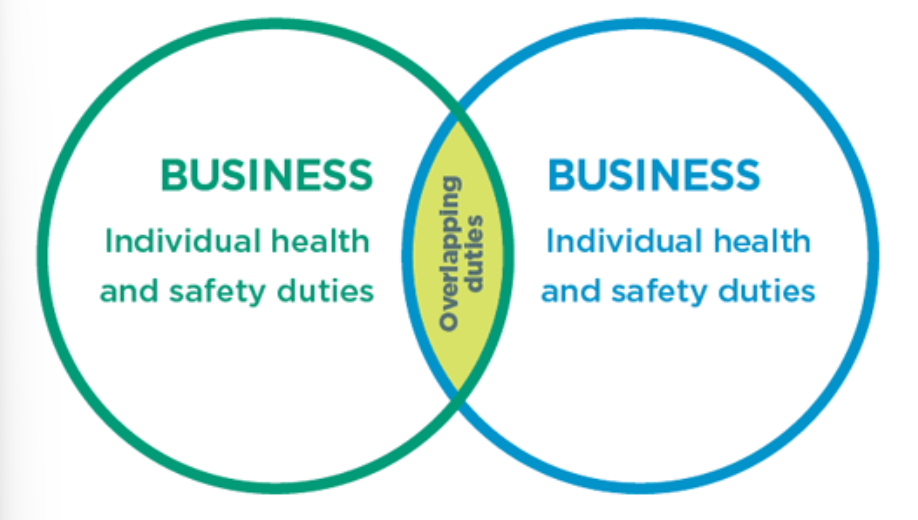
RACI is an acronym used in task and resource planning within project management. It stands for:
- Responsible
- Accountable
- Consulted
- Informed
Here’s how it works:
- Responsible: Individual who undertakes a task
- Accountable: A person who signs off an activity
- Consulted: Refers to people who contribute inputs to an activity without necessarily participating in the activity.
- Informed: Persons who have to be informed of the status of an activity.
Consequently, the project manager is safeguarded by the fact that he or she can manage the resources in such a way that would eliminate cross-over of duties.
How to manage changes in roles and responsibilities in responsibility assignment matrix
Defining and managing roles and responsibilities is one of the most effective ways to manage tasks in project management. One of the best tools for this is the responsibility assignment matrix (RACI matrix), where each team member is assigned as Responsible, Accountable, Consulted, or Informed. This assignment matrix provides clear direction for resource planning in a project.

The RACI matrix also helps ensure effective communication between cross-functional teams and improves organizational resource management. The project manager can easily monitor progress, identify issues, and make workflow changes, increasing the chances of project success.
Software tools for responsibility assignment matrix
The responsibility assignment matrix (RAM) often requires project management software. For example, the RACI matrix can be used to identify project team roles and responsibilities. It categorizes team members into four roles: Responsible, Accountable, Consulted, and Informed. This helps reduce overlapping duties and incorrect allocation of responsibilities or resources, enhancing resource and task accountability.
Moreover, the programs help in the management of resources in a project, especially in a multi-disciplinary team setting where things need to be clear. These tools can be used by the project manager to prioritize and monitor the workload and distribute tasks in a manner that the individual members of the team understand that they are part of a project and that everyone has a role to play.
Microsoft project
Microsoft Project is essential in project management since it assists in managing the project, tasks, resources, and planning project resources. This software enables project managers to categorize roles and responsibilities through the use of the RACI matrix, a type of responsibility assignment matrix. This helps identify each team member's role within a process or activity: Responsible, Accountable, Consulted, or Informed.
It is especially useful in cross-functional teams as it assists in aligning every member of the team and following the same goal. Describing the responsibilities by an assignment matrix in the Project in Microsoft Project helps to complete the tasks on schedule on a project timeline.
Smartsheet
Smartsheet is a flexible tool helpful in project management, especially for assigning roles and responsibilities using the RACI matrix. The RACI model stands for Responsible, Accountable, Consulted, and Informed. It is effective and useful in cross-functional teams because it makes managing resources and tasks in any project easier.
Key points include:
- Streamlining project resource planning,
- Providing role clarity to the team members so that they can be in a position to understand what their specific responsibilities are and what the general responsibilities of the team are.
- Enhancing overall project performance.
This is because with Smartsheet a project manager is allowed to monitor all aspects of the project to ensure they are well coordinated.
Wrike
Wrike is an effective tool for project managers to organize tasks, resources, responsibilities, and employee duties. Its RACI matrix feature defines accountability among cross-functional team members for specific tasks.
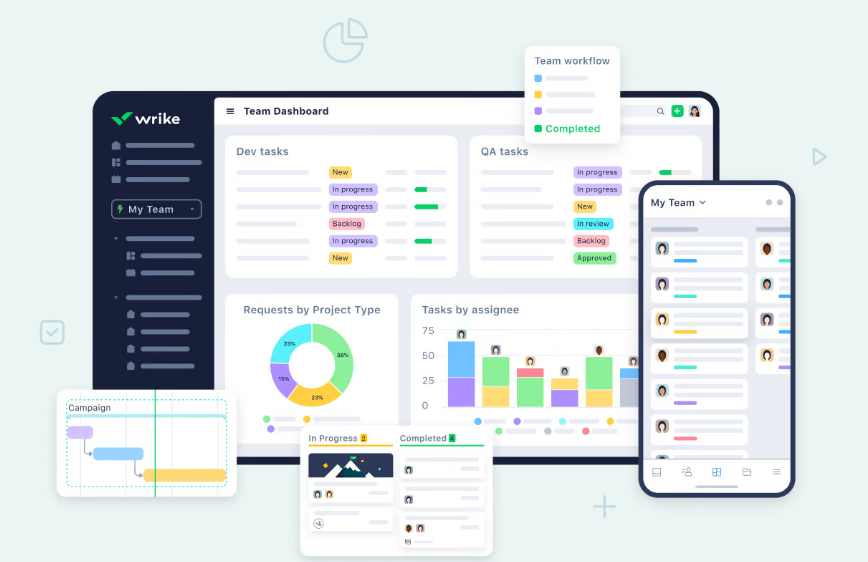
In Wrike, the RACI matrix comprises Responsible, Accountable, Consulted, and Informed roles. It ensures each team member understands their responsibilities, making resource planning easier. Wrike is a versatile tool offering solutions crucial to project success.
Conclusion: enhancing project management with responsibility assignment matrix
Improving responsibility assignment matrices (RAM) like the RACI matrix enhances responsibility assignment, task management, and resource management across projects and cross-functional teams. RAM provides a clear guide to identifying needed resources and how team members contribute to project goals. The RACI matrix clarifies who is responsible for what and when, who should be consulted, and keeps everyone informed. Using RAM in project management increases productivity and helps managers lead their teams to deliver projects successfully.


'%3e%3cg id='Final-Copy-2_2_' transform='translate(1275.000000, 200.000000)'%3e%3cpath class='st0' d='M7.4,12.8h6.8l3.1-11.6H7.4C4.2,1.2,1.6,3.8,1.6,7S4.2,12.8,7.4,12.8z'/%3e%3c/g%3e%3c/g%3e%3c/g%3e%3cg id='final---dec.11-2020'%3e%3cg id='_x30_208-our-toggle' transform='translate(-1275.000000, -200.000000)'%3e%3cg id='Final-Copy-2' transform='translate(1275.000000, 200.000000)'%3e%3cpath class='st1' d='M22.6,0H7.4c-3.9,0-7,3.1-7,7s3.1,7,7,7h15.2c3.9,0,7-3.1,7-7S26.4,0,22.6,0z M1.6,7c0-3.2,2.6-5.8,5.8-5.8 h9.9l-3.1,11.6H7.4C4.2,12.8,1.6,10.2,1.6,7z'/%3e%3cpath id='x' class='st2' d='M24.6,4c0.2,0.2,0.2,0.6,0,0.8l0,0L22.5,7l2.2,2.2c0.2,0.2,0.2,0.6,0,0.8c-0.2,0.2-0.6,0.2-0.8,0 l0,0l-2.2-2.2L19.5,10c-0.2,0.2-0.6,0.2-0.8,0c-0.2-0.2-0.2-0.6,0-0.8l0,0L20.8,7l-2.2-2.2c-0.2-0.2-0.2-0.6,0-0.8 c0.2-0.2,0.6-0.2,0.8,0l0,0l2.2,2.2L23.8,4C24,3.8,24.4,3.8,24.6,4z'/%3e%3cpath id='y' class='st3' d='M12.7,4.1c0.2,0.2,0.3,0.6,0.1,0.8l0,0L8.6,9.8C8.5,9.9,8.4,10,8.3,10c-0.2,0.1-0.5,0.1-0.7-0.1l0,0 L5.4,7.7c-0.2-0.2-0.2-0.6,0-0.8c0.2-0.2,0.6-0.2,0.8,0l0,0L8,8.6l3.8-4.5C12,3.9,12.4,3.9,12.7,4.1z'/%3e%3c/g%3e%3c/g%3e%3c/g%3e%3c/g%3e%3c/svg%3e)