


Obviously, it is important that client reporting should be done in the most efficient way that can foster good client-agency relationships. It supports transparency, client retention, and engagement. Effective reporting must involve availing of clear client information, and the right data should be available always. Besides, it should adapt the content and scope of the report for every client.
Key areas to consider in client reporting include:
- Content accuracy
- Report delivery methods
- Client engagement
- Use of dashboards
- Frequency and format
- Client communication: Positive emotions were reported by the respondents associated with timely and therapeutically relevant as well as open communication.
- Client accountability: This includes being answerable and accountable.
- Delivery method: Choosing an effective and accessible channel for every client.
Building reports with clients: why client reporting matters
Client reporting is thus an essential part of the client-agency relationships that play a critical role in the realization of better client relations. It describes the experiences of a project, milestones attained, and barriers encountered and hence involves clients. Further, the quality, meaning and relevance of information contained in reports can greatly impact client satisfaction.
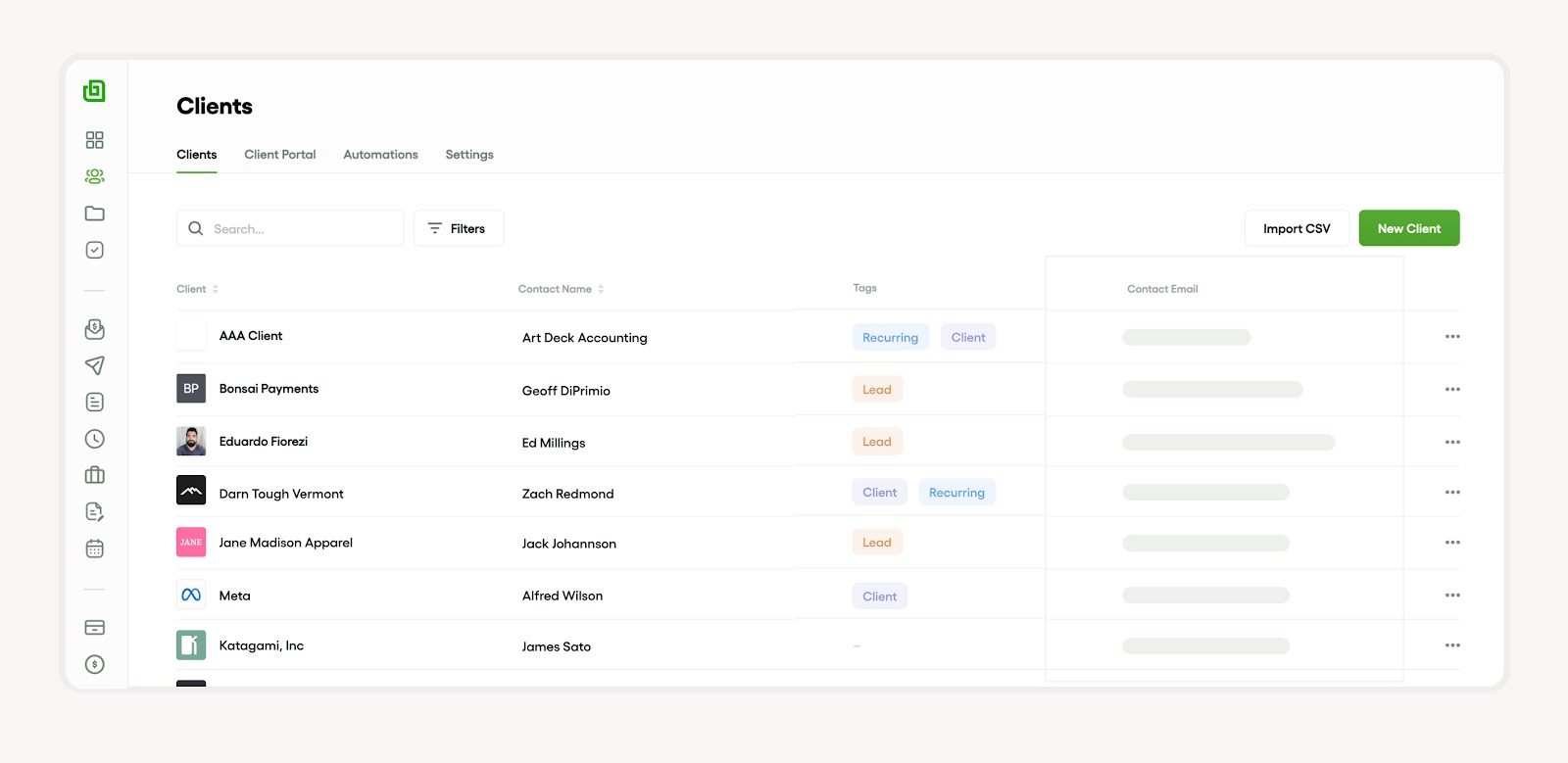
Client reporting success depends on having a coherent reporting structure. This ranges from the actual content of the report to the method of report delivery. Implementation of client dashboards helps the organization improve the quality of reporting with clients and provides a simple, clear picture to the client. At its core, client management goes beyond delivering services and a client relationship founded purely on commercial information exchange. It includes trust and communication, with client reporting central to the relationship.
What is client reporting?
Client reporting is central to managing and communicating with clients. It enhances objective and truthful cooperation between the client and the agency. This strategic approach updates clients on the position, development, and outcomes of business endeavors relevant to decisions. The main strategies for a great client report are choosing what information to provide, ensuring content accuracy, and deciding how to deliver this information. Client reporting contributes to client retention by allowing clients to hear from the law firm more frequently and comprehensively.
Why build reports with clients for agencies?
Client reporting is important for agencies as it helps create a strong bridge between the agencies and their clients and helps the agency retain more clients. One of its key purposes concerns engaging clients and sharing information with them, thus making clients more responsible. Client management is also made possible by competent reporting processes.
Client dashboards determine how report content is presented. They ensure the right information is delivered through the appropriate channels. As a result, agencies improve their credibility and strengthen client relationships by providing accurate and unambiguous reports.
What is client reporting?
Understanding client reporting
Client reporting is the process of sharing clear, organized updates about project progress, results, or services with your clients. It helps keep everyone aligned by providing transparency on what has been done, what is in progress, and what the next steps are. For freelancers and small business owners, client reporting builds trust and demonstrates professionalism.
Effective client reports often include key metrics, timelines, and any challenges encountered. For example, a freelance graphic designer might send a weekly report showing completed design drafts, feedback received, and upcoming deadlines. This keeps clients informed and reduces misunderstandings.
To start building reports with clients, decide on the frequency and format that suits both parties. Tools like HelloBonsai, Trello, and Google Docs can help you create and share reports easily. Regular, concise updates improve client satisfaction and project outcomes.
Why client reporting matters for freelancers and small businesses
Client reporting matters because it creates a clear communication channel that prevents surprises and builds confidence. According to a 2024 survey by HubSpot, 72% of clients value regular updates as a key factor in their satisfaction with freelancers and agencies.
For small businesses, detailed reports can justify billing and show the value of your work. For instance, a marketing consultant might include data from Google Analytics to show how campaigns improved website traffic. This concrete evidence supports invoicing and encourages repeat business.
Implementing client reporting also helps you track your own progress and spot issues early. By reviewing reports together, you can adjust timelines or scope before problems escalate. Start by setting clear goals for each report and use visual aids like charts or screenshots to make your updates more engaging.
How to build effective client reports in 2024
Building effective client reports starts with understanding what your client needs to know. Ask them upfront about their preferred update frequency—weekly, biweekly, or monthly—and the level of detail they expect. This ensures your reports are relevant and welcomed.
Use tools designed for easy reporting. HelloBonsai offers customizable templates that include project milestones, time tracking, and invoicing summaries all in one report. Alternatively, platforms like Asana or Monday.com allow you to export progress reports that clients can access anytime.
Keep your reports concise but informative. Focus on results, next steps, and any risks or delays. Ending with a clear call to action, such as scheduling a review call or approving the next phase, helps maintain momentum. Regularly ask for client feedback on your reports to improve their usefulness over time.
Types of client reports
project status report
A project status report provides a clear snapshot of where a project stands at a specific point in time. It highlights completed tasks, upcoming milestones, and any roadblocks that could impact deadlines. Freelancers and small business owners can use tools like Asana or Trello to generate these reports automatically, saving time and ensuring accuracy.
For example, a graphic designer working on a branding project might send a weekly status report showing completed logo drafts, client feedback received, and next steps like finalizing color palettes. This keeps clients informed and builds trust by demonstrating steady progress.
To create an effective project status report, include concise updates, visuals such as Gantt charts or progress bars, and a summary of any issues needing client input. Regularly sharing these reports helps prevent misunderstandings and keeps projects on track.
financial report
A financial report outlines the budget, expenses, and overall financial health of a project. It is essential for freelancers managing client funds or projects with fixed budgets. Tools like QuickBooks or FreshBooks can help track expenses and generate detailed financial reports automatically in 2024.
For instance, a freelance marketing consultant might provide a monthly financial report showing how the client’s budget was allocated across ad spend, content creation, and analytics tools. This transparency helps clients understand where their money is going and justifies costs.
When building financial reports, include clear categories, actual versus budgeted expenses, and forecasts for upcoming costs. This approach supports informed decision-making and helps avoid budget overruns during the project lifecycle.
progress report
A progress report focuses on the work completed over a defined period, often weekly or monthly. It tracks deliverables against the project plan and highlights achievements or delays. Freelancers can use Google Docs or Microsoft Word templates to create easy-to-share progress reports.
For example, a web developer might send a progress report detailing completed website pages, testing phases, and any bugs fixed. Including screenshots or links to live pages can make the report more tangible for clients.
To make progress reports actionable, clearly state what was accomplished, what remains to be done, and any client actions required. This keeps communication transparent and ensures everyone stays aligned on project goals.
performance report
A performance report measures how well the project or service meets predefined goals and key performance indicators (KPIs). This type of report is especially useful for ongoing services like social media management or SEO consulting. Platforms like Google Analytics or SEMrush can provide data for these reports in 2024.
For instance, a freelance SEO specialist might deliver a monthly performance report showing keyword rankings, website traffic growth, and conversion rates. These metrics demonstrate the value of the work and help clients see return on investment.
When preparing performance reports, focus on relevant KPIs, use clear visuals like charts, and explain what the data means for the client’s business. This approach helps clients understand progress beyond just tasks completed.
Building reports with clients: key elements of an effective client report
A good client report includes features such as the report's contents, information quality, and presentation. It should be brief, provide outsiders with details about the client’s project, encourage openness, and increase accountability. The information must be current and credible, establishing trust in the client-agency relationship. Finally, the delivery method should be convenient and clear to enable easy client reporting, enhancing engagement and improving client retention.
Clear objectives and goals
This course aims to improve cooperation and transparency between clients and agencies. Our goal is to ensure high client retention rates, supported by effective client billing and tracking. We focus on enhancing client engagement and managing clients properly. We also plan to activate publications on the company’s reporting and improve report content. Major improvements will include creating focused reports tailored for each client and emphasizing facts and accuracy in information reporting.
Relevant metrics and KPIs
Managing clients remains one of the most critical success factors in relationships between clients and advertising agencies. This is easily measurable in terms of such KPIs as client turnover rates, the bandwidth and quality of their interaction, and the degree of participation. Scheduled, proper, and concise reporting of the clients also has another important role in enhancing the transparency and accountability of the operations.
General details used for these KPIs can be presented through client dashboards, making it easy to remember the content of the report and enhance the reporting process. Information integrity is critical for these dashboards, but determining the right delivery vehicle for constantly updating clients is vital.
Visual data representation
Self-introductions play an important role in improving the quality of client-contractor negotiations and establishing transparency. Client dashboards should be applied as a convenient instrument for transferring information, being accurate, and engaging the client. Moreover, they promote clients’ responsibility, enhancing the reporting mechanism and management of clients. However, the process through which these visual representations are delivered, as well as the contents of a report, are other aspects that need to be considered with regard to client retention. A clear report focusing on the client’s needs and goals enhances client relations and better communication with the client and, therefore, is likely to satisfy the client.
How to track progress
In matters of client-agency relations, tracking of progress is highly prescribed, mostly due to the interactions it creates and its impact on client reviews. Others are the client’s dashboard, which gives a simplified view of the program, achievements made, and other parts of the program that need attention. This tool improves the level of customer interface while, at the same time, guaranteeing the integrity of the information.

In client management, it is very important to have proper communication with the client. Reporting should present brief content, making it clear that the results are useful for strategy while avoiding extraneous information. In addition, the delivery method needs to be effective reflecting the client’s preference, thereby enhancing accountability on the side of the client as well as enhancing the bond between the client and the service provider.
Building reports with clients: best practices for client reporting
Another traditional component of the relationships between clients and agencies is reporting. An important note that flows from this best practice is that transparency and information accuracy in the reporting process are critical in maintaining client confidence to overcome any turnover. Use should include clear formulating of data that should be in the form of reports that should be regular, objective, and correspond to the goals and objectives of the client. Selecting the right mode of delivering it is also crucial for communication with the client via email updates and through a dashboard or a face-to-face conversation. Finally, constant client interactions and frequently delivered reports not only give the clients updates on the work but also promote client responsibility as they realize their place within the project.
How to keep reports simple and understandable
The ability to report to clients is an essential element of the success of client-agency relations and is a determinant for retaining clients. There is a need for more emphasis on extending and enhancing reports information accessibility and credibility that advances the client’s responsibility. From these main points above, it can be figured out that understanding, both in terms of the content of the report and the method, can improve client communication. It also helps in working effectively with our clients and in creating deeper and more multi-faceted client contacts.
Some strategies include:
- Organization of reporting process through client dashboards
- Make reports as informative to the target client as possible
- Reports should be brief to maintain focus on the report.
How to report regularly and timely
The implementation of professional reporting, as foreseen by this proposal, is an excellent way of improving the flow of communication between the client and the agency, and thus minimizing the cases of churn among the clients. It involves the adoption of a cost-effective client-based documentation system for client issue tracking. The process helps set up good communication with the clients hence enhancing client relations and client control. There are crucial aspects when it comes to doing client reports which include the reporting Process, what is in the report, and the focus of the report. Such details have to be accurately prepared at great detail in order to provide accurate information and the right delivery medium. This goes a long way in ensuring positive client relations are upheld all the time. Through the enhancement of these aspects, agencies will be in a better position to win trust and transparency, which are important factors that enable clients to be retained for the long term.
How to customize reports for each client
In discussing the ways of enhancing client-agency relationships, it is necessary to mention the idea of individual reporting. This enhances transparency and increases client satisfaction and ensures that they embrace the services offered through the client dashboards by availing the right information to them individually. Which in turn enhances client responsibility, motivation, and, in general, client representation. Reporting starts at the point that involves consideration and identification of contents of the report that are considered relevant by the client. It is crucial to underline the significance of paying attention to information accuracy while delivering the report to the client, which fulfills one’s mission – choosing the correct delivery method. All these aspects play a role in developing dependable client relations.
How to provide actionable insights
Building and improving client-agency relations is nowadays largely based on good communication with the client and accountability to the client. It also means that daily, open, transparent dialogue improves client loyalty as it brings people closer together. This maintains coverage, relevance and accuracy of the content of the reports and their focus on the needs of the clients.
Client dashboards offer an easy way to make reporting direct, convenient, and engaging, thus making reporting an easier process. Regular client management and client reporting are important to ensure a good relationship with the client. Increased openness and information exchange can improve the quality of the business relationships that are being developed. Here are a few things to note:
- Obscurity
- Ineffective client relations
- Dissemination of incorrect information
- The relationship between the clients and the agencies has to be strengthened through communication and meeting the set responsibilities.
- A client board makes driving client engagement easier and also makes reporting less cumbersome.
- Regular management and reporting lead to credibility and partnership.
Building reports with clients: common mistakes and how to avoid them
The typical errors include obscurity, ineffective client relations, and, of course, the dissemination of incorrect information. Both of these errors can be detrimental to a client services team or to client-agency relationships in general and can lead to lost business. First of all, this is to ensure that the business persons are transparent so that a good foundation of trust can be developed. Hence, make the content of your report simple for other individuals to read and understand. Second, poor communication routes and frequency may cause some misunderstandings with regard to client relations. Finally, when they are passing information into the client’s interface, it highlights reliability while at the same time, it makes the client take an extra level of responsibility when filling the report.
How to avoid overloading reports with data
There is also one more typical problem in client-agency relationships, and it is the confusing effect of an excessive number of detailed reports. This can make reporting a process full of hassles and alter the delivery method, making the clients opaque and losing them in the process. Accompanying the importance of maintaining report focus and information accuracy provides agency and customer relations a boost that aids in client management and client communication. Agencies should also use limited dashboards specific to the client, which show confined data. This not only increases the accountability of the clients but also increases their interaction level. Moreover, it increases efficiency in the content of the report so that improved client relationships may be achieved.
How to meet the client's specific needs
Client management requires understanding and recognizing their needs to achieve the objectives of the firm. This aspect should not be overlooked as weaker client-agency connections can directly affect clients. Entertainment businesses must embrace transparency and communicate often with clients as part of the reporting process. Greater interactions with clients can be achieved by:
- Representing every report on a client’s personalized dashboard, reflecting what the specific client finds useful
- Sustaining correct report concentration aligned towards client needs
- Confirming report content credibility
- Deciding on the right report delivery mechanism
These actions are significantly useful in building healthy client relationships. Failing to meet these particular needs may lead to reduced responsibility among clients.
How to communicate results effectively
Duties of client: The important thing that helps ensure flexible client-agency interaction depends upon the client’s side is communication, mainly in reporting. The inability to relay findings back to the clients can be a reason for obscurity that reduces client confidence and retention.
Key aspects of building reports with clients include:
- The accuracy of report content to be submitted
- Selecting the appropriate medium to present reports to clients
- Keeping reports specific to a central theme
Using these steps to engage clients improves client responsibility and stabilizes client handling procedures.
Building reports with clients: top tools for client reporting
Improving existing client-agency relationships depends on better reporting, which extends the duration of engagement. Some of the most used tools include client dashboards with real-time updates and report focus for client management. These are client interaction tools, and client communication is a vital component. Effective reporting tools ensure information accuracy and provide efficient delivery methods. This fosters accountability with clients and enhances client relations. The report content delivered through these tools is very important for building trust and forming long-term relationships.
1. Bonsai: simplify client reporting with ease
Bonsai offers a comprehensive suite of features designed to streamline client reporting. With Bonsai’s intuitive client dashboards, agencies can easily create clear, organized reports that are customized to each client’s needs. These dashboards ensure that relevant project data is not only accessible but also presented in a way that fosters transparency and enhances trust. Furthermore, Bonsai’s automated reporting tools allow agencies to deliver timely updates, reducing manual workload and ensuring that clients stay informed at all times.
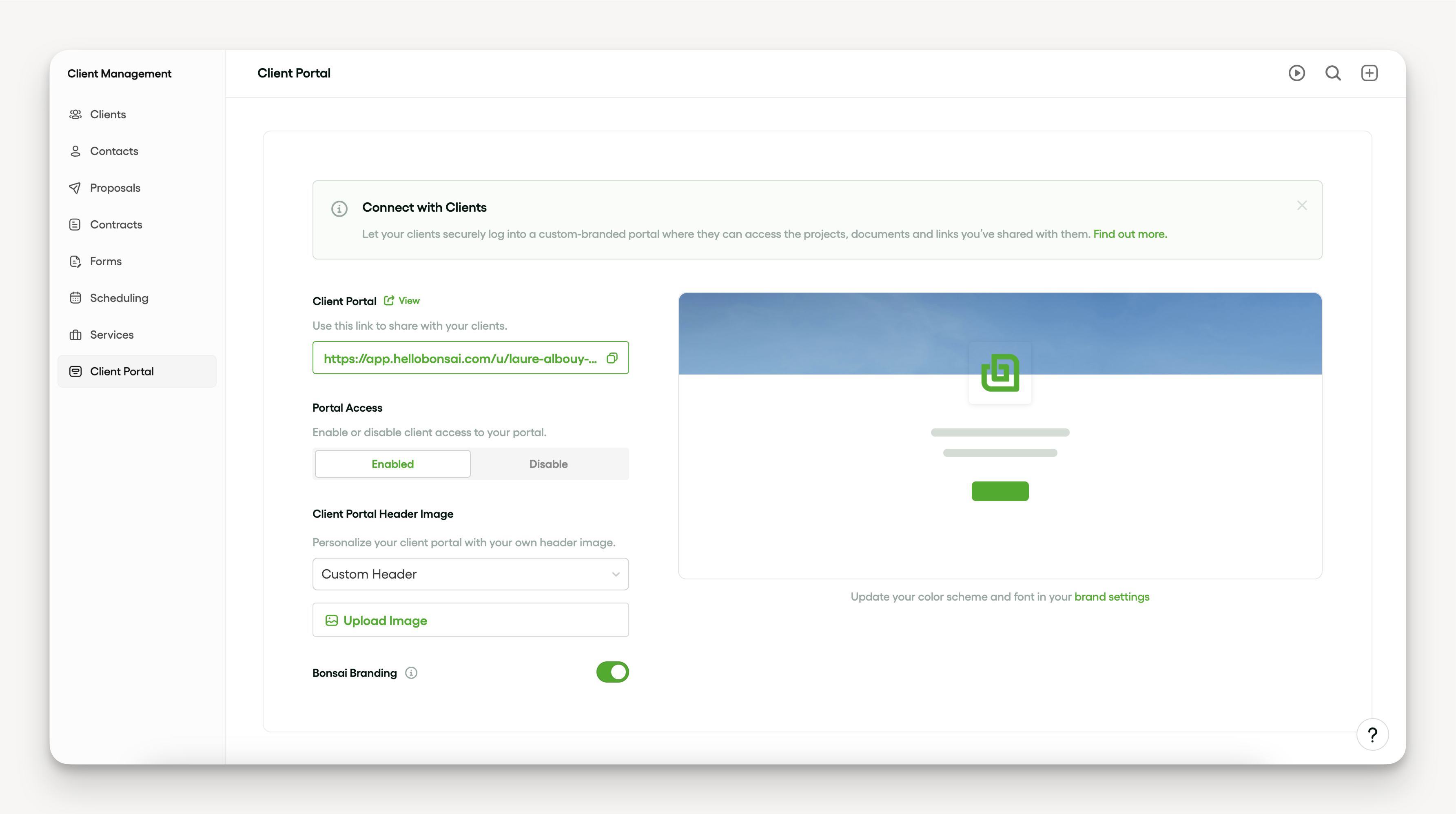
Link to Client Portal Settings
Key features of Bonsai’s reporting tools include:
- Automated report generation: Save time by automating the process of compiling and sending regular reports to clients, with customizable templates that reflect each client’s project scope.
- Customizable client dashboards: Tailor the data presentation to suit individual client preferences, making reports more engaging and easier to understand.
- Real-time progress tracking: Provide clients with up-to-date information on their projects, improving communication and accountability.
- Seamless integration with other tools: Bonsai integrates with project management and invoicing tools, allowing agencies to provide comprehensive insights without having to switch between platforms.
Using Bonsai, agencies can foster stronger client relationships by ensuring that reports are clear, concise, and timely—elements that are crucial for client satisfaction and retention.
Start a 7-day free trial of Bonsai now.
2. Google Data Studio: provide a comprehensive reporting solution
Google Data Studio transforms the dynamics of building reports with clients by enhancing report clarity from the client’s side to the agency’s side. It reinforces client relations, privilege, and authority by increasing overall report clarity and boosting client satisfaction and engagement. The tool enables a custom client interface, precise information, and improved client communication and engagement.
Key features of Google Data Studio include:
- Report focus: this enables agencies to regulate what should be included in the report depending on the client’s requirements.
- Client accountability: if not, the delivery should be in real-time, and all delivery methods should be clear to the customer.
- Client management: providing detailed information for the correct choice.
3. Tableau: visualize data effectively
Tableau strengthens the client-agency bond through its powerful data display capabilities. Its primary objectives include client management and communication, improving transparency and accuracy in information disclosure. Various reporting process aspects, such as key dynamics, have been enhanced using Tableau. It helps create clear report content and improves delivery methods.
The software enhances client participation and responsibility, which are critical for client loyalty. Features like client dashboards increase report focus, giving clients a clear view of their profile's performance. Therefore, Tableau not only enriches client relations but also improves the reporting process.
4. HubSpot: report on inbound marketing
HubSpot overhauls client reporting by managing clients and engaging with them effectively. It provides client interfaces displaying current status and performance metrics, which help increase client responsibility and transparency.
HubSpot’s efficient reporting system prioritizes valuable report content for clients. It provides relevant, accurate, and reliable information, strengthening business-client relationships and fostering a long-term client base. The chosen mode of report delivery also improves client relations and enhances overall client performance.
5. SEMrush: improve SEO and online visibility reporting
SEMrush helps manage clients through efficient organization of client-agency interaction. It clarifies the reporting process and improves client interaction by providing detailed client reports. This prevents misinformation and ensures reports are delivered through the correct channels.
The proper employment of SEMrush enables clients’ engagement and loyalty by regulating normal and trustworthy report content and focus. Being a crucial aspect of attaining client accountability, this tool maintains a healthy relationship with the clients.
Building reports with clients: enhance client relationships through effective reporting
Clients want tangible proof of the successful development of campaigns, making reporting a key process to optimize for enhancing the client-agency relationship. This includes how report information is presented, the method of delivery, and ensuring the data is up-to-date and accurate according to the agreed terms between provider and recipient. Additionally, client dashboards provide the best representation of progress and outcomes to increase client accountability and engagement. Effective client management is best seen in the quality of client reporting, which is central to building strong client relationships.


'%3e%3cg id='Final-Copy-2_2_' transform='translate(1275.000000, 200.000000)'%3e%3cpath class='st0' d='M7.4,12.8h6.8l3.1-11.6H7.4C4.2,1.2,1.6,3.8,1.6,7S4.2,12.8,7.4,12.8z'/%3e%3c/g%3e%3c/g%3e%3c/g%3e%3cg id='final---dec.11-2020'%3e%3cg id='_x30_208-our-toggle' transform='translate(-1275.000000, -200.000000)'%3e%3cg id='Final-Copy-2' transform='translate(1275.000000, 200.000000)'%3e%3cpath class='st1' d='M22.6,0H7.4c-3.9,0-7,3.1-7,7s3.1,7,7,7h15.2c3.9,0,7-3.1,7-7S26.4,0,22.6,0z M1.6,7c0-3.2,2.6-5.8,5.8-5.8 h9.9l-3.1,11.6H7.4C4.2,12.8,1.6,10.2,1.6,7z'/%3e%3cpath id='x' class='st2' d='M24.6,4c0.2,0.2,0.2,0.6,0,0.8l0,0L22.5,7l2.2,2.2c0.2,0.2,0.2,0.6,0,0.8c-0.2,0.2-0.6,0.2-0.8,0 l0,0l-2.2-2.2L19.5,10c-0.2,0.2-0.6,0.2-0.8,0c-0.2-0.2-0.2-0.6,0-0.8l0,0L20.8,7l-2.2-2.2c-0.2-0.2-0.2-0.6,0-0.8 c0.2-0.2,0.6-0.2,0.8,0l0,0l2.2,2.2L23.8,4C24,3.8,24.4,3.8,24.6,4z'/%3e%3cpath id='y' class='st3' d='M12.7,4.1c0.2,0.2,0.3,0.6,0.1,0.8l0,0L8.6,9.8C8.5,9.9,8.4,10,8.3,10c-0.2,0.1-0.5,0.1-0.7-0.1l0,0 L5.4,7.7c-0.2-0.2-0.2-0.6,0-0.8c0.2-0.2,0.6-0.2,0.8,0l0,0L8,8.6l3.8-4.5C12,3.9,12.4,3.9,12.7,4.1z'/%3e%3c/g%3e%3c/g%3e%3c/g%3e%3c/g%3e%3c/svg%3e)