





Operational inefficiencies can severely disrupt operations, leading to poor sales, ineffective marketing, and weak internal communication. Causes include inefficient back-office operations, time-consuming tasks, and high overhead costs. These factors slow processes, create bottlenecks, and cause redundancies.
Manual, complicated processes can waste time and money, often seen in too much paperwork. To fix this, businesses should spot waste areas, streamline workflows, and automate where possible. This boosts efficiency, profitability, and overall performance.
What are operational inefficiencies?
Operational inefficiencies show up in many ways, like slow processes, bottlenecks, and bad communication. These issues waste time and money, leading to high overheads.
Common pain points include excessive paperwork in administrative tasks, slow back-office workflows, and ineffective marketing that reduces sales. Manual processes are major contributors as they are time-consuming and complicated.
Definition and importance of operational inefficiencies
Operational efficiency is about delivering goods or services cost-effectively and on time. It means cutting time-consuming tasks, reducing high overheads, and fixing inefficient processes, leading to better profitability and customer satisfaction.
Improving efficiency is crucial as it impacts the bottom line. Inefficient operations, poor sales, too much paperwork, and bad marketing waste time and resources. Enhancing efficiency helps clear bottlenecks, fix back-office issues, and simplify processes, reducing waste.
Assessing operational inefficiencies
Identifying areas of inefficiency in processes
Operational inefficiencies often hide in routine business processes that appear normal but waste time or resources. Start by mapping your key workflows, such as client onboarding, project delivery, and invoicing. Look for steps causing delays, duplicate efforts, or requiring excessive manual input.
For example, if your invoicing process involves manually entering data into multiple systems, this could lead to errors and slow payments. Use simple tools like flowcharts or process mapping software such as Lucidchart or Microsoft Visio to visualize these steps clearly. This helps pinpoint bottlenecks and redundant tasks that reduce productivity.
Once you identify inefficient areas, prioritize them based on their impact on your business goals. Focus first on processes that directly affect cash flow or customer satisfaction. Taking this structured approach ensures you address the most critical inefficiencies early.
Gathering feedback from employees and stakeholders
Employees and stakeholders have firsthand knowledge of operational inefficiencies that data alone cannot reveal. Schedule regular check-ins or anonymous surveys to collect insights on what slows work or causes frustration. Tools like Google Forms and SurveyMonkey simplify feedback collection and organization.
Encourage open communication by asking specific questions about daily challenges, resource shortages, or unclear responsibilities. For instance, a freelancer might report that waiting for client approvals delays project progress, signaling a need to streamline communication channels.
Use this feedback to uncover hidden problems and validate your process analysis. Combining employee input with data-driven findings creates a fuller picture of inefficiencies, enabling you to develop targeted solutions that improve workflow and morale.
Analyzing data and metrics to identify inefficiencies
Data analysis provides objective evidence of where your operations are underperforming. Track key performance indicators (KPIs) like turnaround time, error rates, or customer response times using tools such as QuickBooks, Trello, or Google Analytics. These metrics highlight trends and deviations that suggest inefficiencies.
For example, if your average project completion time has increased by 20% over the last quarter, this signals a slowdown that needs investigation. Break down the data by task or team member to identify specific causes. Additionally, monitor financial metrics like cost per task to spot areas where expenses exceed budgeted amounts.
Regularly reviewing these metrics allows you to measure the impact of any changes you implement. Set up dashboards or automated reports to keep this data visible and actionable. This ongoing analysis ensures continuous improvement and helps prevent inefficiencies from becoming entrenched.
Strategies to address operational inefficiencies with Bonsai task management
Bonsai's task management features are designed to boost productivity by streamlining workflows and enhancing team collaboration. The platform offers an intuitive interface that allows users to create, assign, and track tasks effortlessly. With real-time updates and notifications, team members stay informed about their responsibilities and deadlines, reducing the risk of missed tasks or delays.
Learn how to boost productivity using Bonsai with these tips:
1. Prioritize tasks
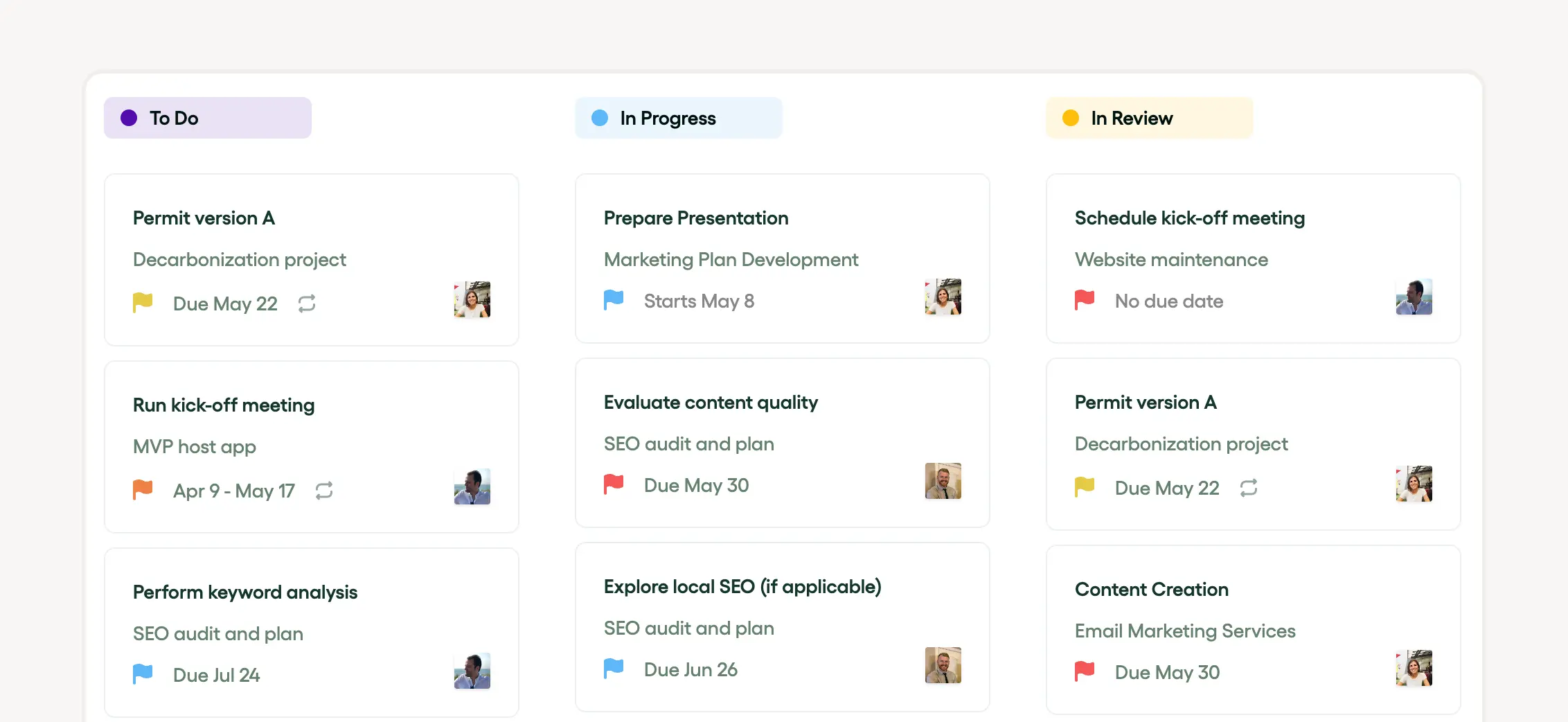
Use Bonsai's task management features to prioritize tasks based on urgency and importance, ensuring critical tasks are addressed promptly. By prioritizing tasks and minimizing distractions, Bonsai helps users focus on what's important, boosting overall productivity.
Here's how to ensure work is completed on time:
- Assign tasks to team members.
- Track task progress with Kanban and list views.
- Use integrated timers to manage time effectively.
- Foster collaboration by inviting team members to projects and assigning tasks.
2. Automate workflows
The best part? Bonsai CRM can do things automatically! It remembers your clients’ details and what you did in your projects. It can even do regular tasks like sending welcome emails, filling out forms, and sending letters. This means you have more time to do other things, and your clients get a smooth and professional experience.
Whether you're managing a small project or coordinating a large team, Bonsai's features are designed to streamline your process and boost productivity.

3. Monitor progress
Use Bonsai's real-time updates and detailed analytics to track team performance and task completion rates, allowing for timely adjustments and optimized resource allocation. The platform offers a wide range of analytics and reporting features that provide valuable insights into team performance and the speed at which tasks are completed.
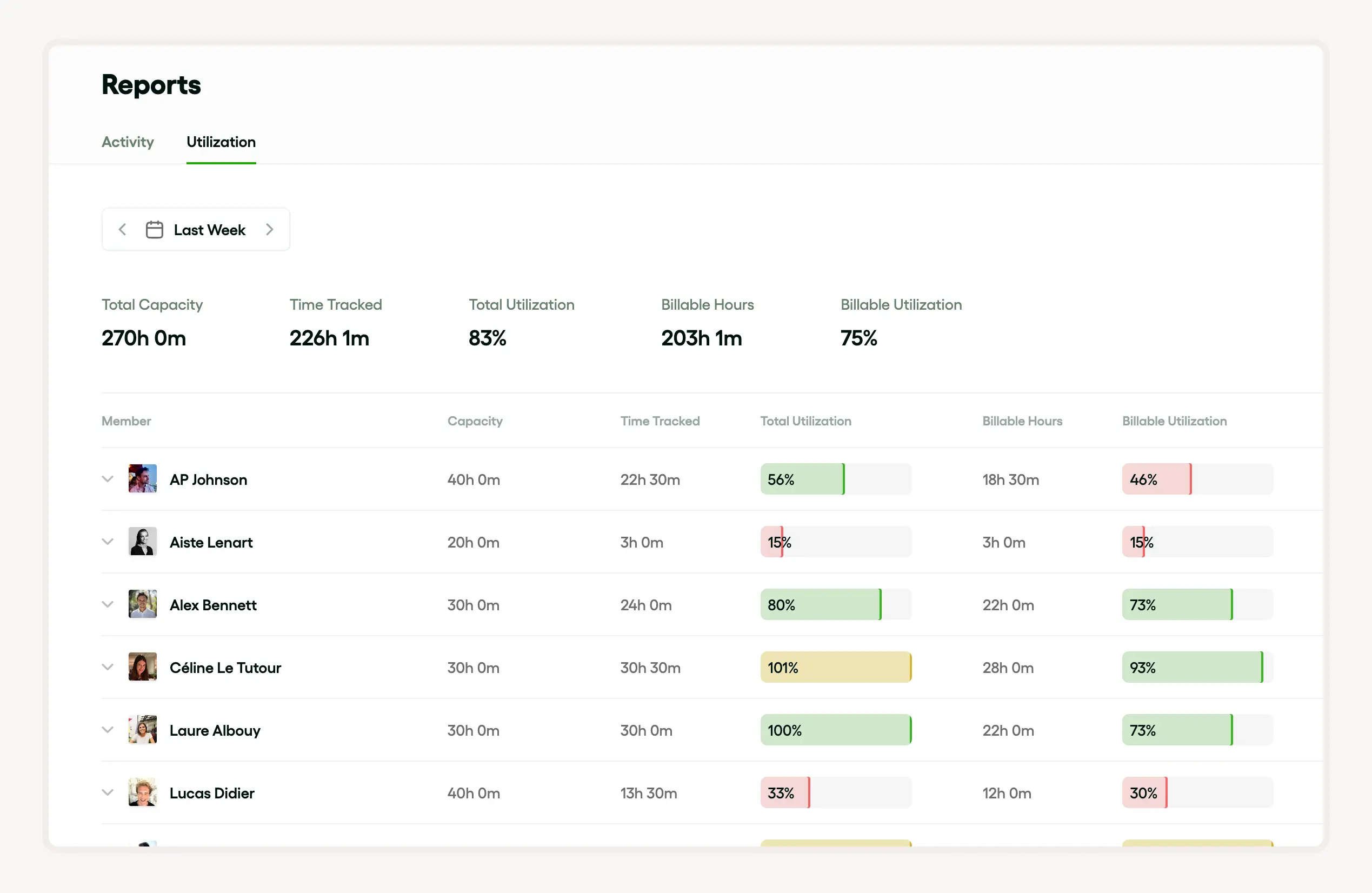
Bonsai's user-friendly dashboards present data in a clear and actionable way, making it easier to monitor progress and identify any obstacles. Detailed reports help optimize resource allocation, ensuring a balanced workload distribution and preventing potential bottlenecks.
Common causes of operational inefficiencies
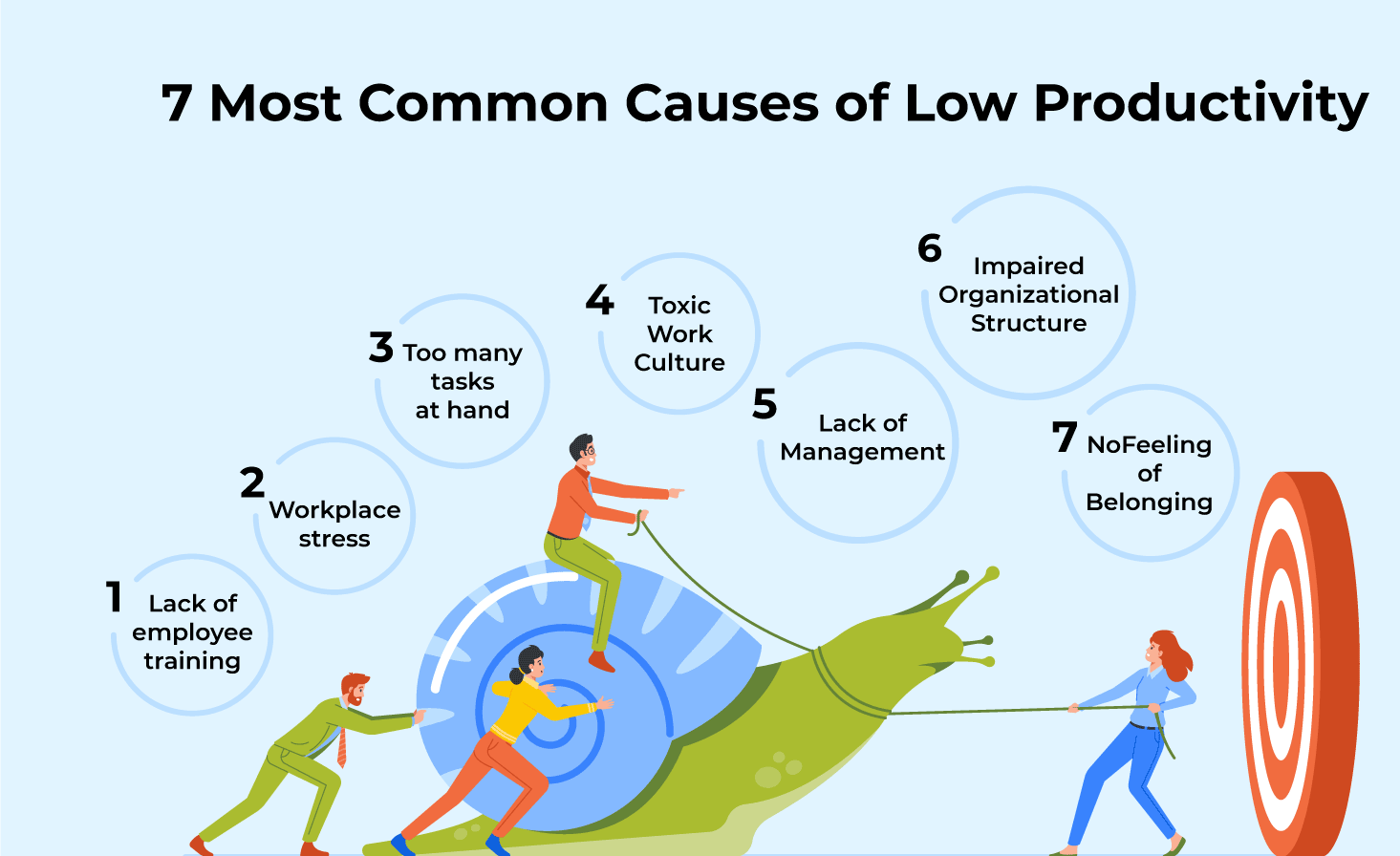
Operational inefficiencies can arise from various sources, including poor internal communication, ineffective marketing, and inefficient processes. These issues result in subpar sales, hurt profits, and waste time and money.
Businesses might face high operational overheads due to inefficient back-office operations and administration. Too much paperwork, manual processes, complicated workflows, and slow operations create bottlenecks and redundancies, impacting productivity and profitability.
Outdated processes and technologies
Outdated processes and technologies lead to inefficient operations, ineffective marketing, and poor sales. They cause time and cost wastage, excessive paperwork, and high operational overheads. This especially harms businesses that require efficient administration and quick workflows.
Poor internal communication, manual processes, and complicated workflows create bottlenecks and redundancies that slow down operations. To stay competitive, businesses must upgrade outdated systems and implement efficient processes.
Lack of employee training and engagement
Lack of employee training and engagement causes inefficient operations and poor sales. Untrained employees waste time and money by working inefficiently, which also leads to poor internal communication and complicates workflows.
High operational overheads may result from ineffective marketing strategies linked to an untrained or disengaged workforce. This creates bottlenecks, redundancies, and inefficient back-office operations as employees struggle with excessive paperwork and manual processes.
Poor communication and collaboration
Poor internal communication often leads to inefficient processes and slow workflows. It creates time-consuming tasks and increases the risk of errors, resulting in time and cost wastage and higher operational overheads.
Weak collaboration can lead to poor sales and ineffective marketing. Excessive paperwork, manual processes, and complicated workflows contribute to inefficient back-office operations. This creates bottlenecks and redundancies, resulting in inefficient business administration.
Impact of operational inefficiencies on agencies
Operational inefficiencies like poor communication, complicated processes, and inefficient back-office operations significantly impact agencies. They cause time and cost wastage, slow workflows, and high operational overheads. Poor sales and ineffective marketing can stem from these issues, affecting the agency’s success.
Excessive manual processes and inefficient workflows create bottlenecks and redundancies, hindering progress. Too much paperwork worsens these problems, leading to inefficient business administration and lower productivity.
Financial consequences
The financial consequences of inefficient operations, poor communication, and ineffective marketing are severe. These issues lead to poor sales, high operational overheads, and significant time and cost wastage.
Slow workflows, time-consuming tasks, and excessive paperwork result in inefficient back-office operations and complicated processes. This hampers productivity and creates bottlenecks and redundancies, increasing financial stress.
Streamlining and optimizing inefficient processes is crucial to avoid severe financial consequences and promote sustainable business administration.
Effects on client satisfaction and retention
Inefficient operations and poor sales can lead to low client satisfaction and retention rates. These operational pitfalls often stem from inefficient back-office operations, slow workflows, and poor communication. These challenges result in time and cost wastage, impacting service delivery and customer satisfaction.
Ineffective marketing strategies can also decrease client satisfaction. Combined with high operational overheads and excessive paperwork, these issues magnify inefficient processes, further affecting client retention.
Strategies to address operational inefficiencies
Map out your workflows to identify bottlenecks and redundancies slowing down productivity. Identify slow processes and time-consuming tasks. Use automation to handle high overheads and clunky back-office operations by reducing manual processes.
Straighten communication lines to improve sales and marketing effectiveness. Use a marketing strategy that works. Replace paperwork with digital tools that streamline operations and save costs.

Process mapping and improvement
Process mapping is a roadmap to smoother operations. It highlights clogs in your system, such as slow sales, poor marketing, or bad communication. Sketch out your business processes to identify where time and money are leaking.
By eliminating inefficient back-office operations and tedious tasks and cutting through red tape, you transform your business into a lean, efficient machine. This ensures your business administration runs not just effectively but swiftly.
Investing in employee training and development
Employee training is necessary to turn your team into productivity powerhouses who handle time-consuming tasks efficiently. Training sharpens communication, reduces bottlenecks, and boosts essential job skills.
Training not only keeps operations running smoothly but also improves sales and marketing skills. It promotes more automated, simpler, and better back-office processes, reducing paperwork.
Role of technology in improving operational inefficiencies
Technology is a crucial tool to improve your business. It helps eliminate slow workflows and reduces excess paperwork, streamlining operations effectively.
CRM systems like Salesforce polish up those sales, while digital marketing tools put some muscle into your marketing. With better internal communication systems, technology helps everyone pull in the same direction, reducing overheads and eliminating inefficiencies across the board.
Benefits of using project management tools like Bonsai, Asana and Trello to improve operational inefficiencies
Project management tools like Bonsai, Asana, and Trello aren’t just handy; they’re game-changers. They automate the mundane, clear out bottlenecks, and simplify the complicated, making your business operation a thing of beauty.
.webp)
These tools tighten up your task handling, sharpen internal communication, and cut down on those dreaded paperwork piles. The result? Your operational overheads take a nosedive, saving you time and money.
Bonsai is an incredible tool that assists in maintaining the organization of your project from beginning to end. The platform provides real-time updates on task completion. By prioritizing tasks and minimizing distractions, Bonsai helps users focus on what's important, boosting overall productivity.

Bonsai offers several standout features, including:
- Task management to monitor progress
- Promotes team collaboration
- Handles routine tasks
- Client Management: Bonsai CRM centralizes leads, clients, and notes, simplifying relationship management and follow-ups.
- Project Management: Users can organize projects with documents, payments, tasks, and timesheets, ensuring everything is easily accessible.
- Financial Management: Generate professional invoices with recurring payment options, track project profitability, and gain valuable insights into your business's financial health.
Bonsai offers task management to monitor progress, promotes team collaboration, and handles routine tasks. This allows you to focus on achieving goals. Bonsai is essential for agencies, consulting firms, and professional services providers, helping them run their operations smoothly each day.
How CRM systems like Salesforce can improve operational inefficiencies
CRM systems like Salesforce do more than just keep customer data neat and tidy—they streamline your entire operation. By automating the grunt work and simplifying complex processes, Salesforce lets you focus on what really matters.
It boosts internal communication, helping your team dodge those workflow clogs and redundancy roadblocks. With tools like predictive analytics, Salesforce not only lifts your sales but also refines your marketing, ensuring you’re not just spinning your wheels.
Case studies: examples of successful operational efficiency improvements
How a small manufacturing business eliminated bottlenecks in production
A small manufacturing company improved operational inefficiencies by identifying and eliminating bottlenecks in their production line. They used time-tracking software like Toggl Track to measure how long each stage took, revealing that a manual assembly step was causing delays. By investing in semi-automated tools and cross-training workers, they reduced assembly time by 30% within six months.
This change not only sped up production but also reduced overtime costs by 20%, directly impacting their bottom line. They also implemented daily stand-up meetings to quickly address any emerging issues, ensuring continuous flow. Using project management tools like Trello helped keep tasks organized and visible to the entire team.
For freelancers and small businesses, this case highlights the importance of measuring workflow stages and investing in targeted automation or skill development. Start by tracking your processes to spot delays, then test small improvements before scaling them up.
How a retail business streamlined supply chain management
A mid-sized retail business tackled operational inefficiencies by streamlining their supply chain management. They switched to an integrated inventory management system, such as TradeGecko (now QuickBooks Commerce), which connected suppliers, warehouses, and sales channels in real time. This eliminated manual data entry errors and improved stock visibility.
As a result, they reduced stockouts by 40% and cut excess inventory by 25%, freeing up cash flow. The company also renegotiated contracts with key suppliers to shorten lead times, allowing for more responsive restocking. Monthly performance reviews helped keep the supply chain agile and responsive to demand fluctuations.
Small businesses can replicate this success by adopting cloud-based inventory tools that sync data across platforms. Regularly reviewing supplier performance and lead times also ensures your supply chain remains efficient and cost-effective.
How a service provider improved customer response times through automation
A customer service firm improved operational inefficiencies by automating their response system. They implemented AI-powered chatbots using platforms like Zendesk Answer Bot to handle common inquiries instantly. This automation reduced average response times from 24 hours to under 2 hours in 2024.
Additionally, they integrated their CRM with automated ticket routing, ensuring complex issues reached the right agents faster. This approach increased customer satisfaction scores by 15% and allowed staff to focus on high-value tasks, boosting overall productivity.
Freelancers and small businesses can enhance customer service by using affordable chatbot tools and automating repetitive tasks. Start by identifying frequent questions and automate responses to those. Then, gradually expand automation to streamline workflows further.
Creating a culture of continuous improvement
Encouraging employee engagement to identify inefficiencies
Engaging employees actively helps uncover operational inefficiencies that might be invisible to management. When team members feel empowered to share observations and suggest improvements, they contribute practical insights based on daily work experiences.
For example, using tools like Slack or Microsoft Teams to create dedicated channels for process feedback can streamline communication and idea sharing.
Small businesses can implement regular check-ins or brief surveys to gather input on workflow challenges. According to a 2024 Gallup report, companies with high employee engagement see 21% higher productivity, which directly impacts operational efficiency. Encouraging open dialogue also fosters a sense of ownership and motivation among staff.
To start, set clear expectations that all employees are part of the improvement process. Schedule monthly brainstorming sessions or anonymous suggestion boxes to capture ideas. This approach ensures continuous identification of inefficiencies and builds a proactive culture that supports ongoing operational enhancements.
Establishing systems for sharing and implementing best practices
Creating a structured system to capture and share best practices prevents repeated mistakes and accelerates operational improvements. Tools like Notion or Trello can organize workflows and document successful strategies, making them accessible to the entire team. This centralized knowledge base reduces time wasted on trial and error.
For freelancers and small businesses, maintaining a living document or wiki that updates with new insights ensures everyone stays aligned. For instance, a graphic design freelancer might track client feedback patterns to refine project timelines and communication methods. Sharing these learnings regularly helps embed efficiency into daily routines.
Implementing a feedback loop where team members review and refine best practices quarterly keeps the system dynamic. Encourage team members to contribute updates and celebrate improvements to reinforce the value of continuous learning and operational excellence.
Revisiting and refining strategies to adapt to change
Operational inefficiencies often arise when businesses cling to outdated processes. Regularly revisiting and refining strategies ensures your operations stay aligned with evolving market demands and technology advances. Schedule quarterly reviews to assess workflows, using performance metrics from tools like Asana or QuickBooks to guide decisions.
For example, a small e-commerce business might analyze shipping times and customer satisfaction data to adjust logistics partners or packaging methods. This proactive approach prevents bottlenecks and supports scalability. Incorporating feedback from employees and customers during these reviews adds valuable perspectives.
To maintain momentum, set clear goals for each review cycle and assign responsibility for implementing changes. Documenting lessons learned and measuring impact creates a feedback-driven environment that continuously reduces inefficiencies and improves overall business performance.
Measuring the effectiveness of operational efficiency improvements
Monitoring key performance indicators (KPIs) regularly
Tracking key performance indicators (KPIs) is the most direct way to measure operational efficiency improvements. Identify KPIs that align with your business goals, such as order fulfillment time, cost per unit, or customer response time.
For example, a freelancer might track the average time to complete a project, while a small business could monitor inventory turnover rates.
Use tools like Google Sheets, Trello, or specialized software like Monday.com or Zoho Analytics to collect and visualize KPI data. Reviewing these metrics weekly or monthly helps spot trends and quickly address any backsliding. Consistent monitoring ensures that improvements are not just temporary but lead to sustained operational gains.
Set clear KPI targets before implementing changes. This way, you can compare pre- and post-improvement data to evaluate success. For instance, if your goal is to reduce order processing time by 20% within three months, measure progress against this benchmark to validate your efforts.
Gathering employee feedback on process changes
Employee feedback offers valuable insights into how operational changes affect day-to-day work. After implementing efficiency improvements, conduct surveys or hold brief interviews to understand what’s working and what isn’t. Tools like SurveyMonkey or Google Forms can simplify this process.
Employees often identify bottlenecks or unintended consequences that data alone might miss. For example, a new software tool might speed up one task but create confusion in another. Regular feedback loops ensure continuous refinement and better buy-in from your team.
Encourage open communication by scheduling monthly check-ins focused solely on operational workflows. Acting on employee suggestions not only improves efficiency but also boosts morale and engagement, which are critical for long-term success.
Analyzing return on investment (ROI) of efficiency measures
Calculating the return on investment (ROI) helps determine if your operational improvements are financially worthwhile. ROI compares the cost of implementing changes against the benefits gained, such as reduced labor hours or lower material waste.
For example, if you invested $2,000 in automation software that saves 10 hours of work weekly, multiply the hourly wage by saved hours to estimate monthly savings. If your hourly rate is $25, that’s $1,000 saved per month, meaning the software pays for itself in two months.
Use simple ROI formulas or accounting tools like QuickBooks to track these figures. Regularly reviewing ROI ensures that your efficiency efforts contribute positively to your bottom line and helps prioritize future investments.
Implementing change to overcome resistance and challenges in operational inefficiencies
Tackling resistance and challenges in change implementation requires a solid strategy and clear communication. Fix inefficient operations, boost sales, and revamp marketing efforts.
Focus on three main areas:
- Communication: Poor internal communication can halt progress. Ensure transparency and clarity during changes.
- Automation: High overheads and time-consuming tasks can be fixed by automating and streamlining processes, cutting time and costs.
- Efficiency: Remove bottlenecks and redundancies in workflows and back-office operations. Simplify business administration for a smooth transition.
Strategies to manage change for operational inefficiencies in agencies
Agencies need robust change management strategies to tackle inefficient processes, bad marketing, and poor sales. Streamline slow workflows, eliminate bottlenecks, and automate tasks. Address high overheads and excessive paperwork for better back-office efficiency.
Improve internal communication for transparency and better information sharing. Target inefficient operations to cut time and cost wastage, boosting competitiveness and profitability.
How to measure success by tracking improvements in operational inefficiencies
Tracking operational efficiency improvements is crucial. Focus on inefficient processes, high overheads, and slow workflows. Measure success to reduce time and cost wastage, fix back-office inefficiencies, and cut paperwork.
Improving marketing strategies, sales efforts, and internal communication can boost efficiency. Replace manual tasks with automated processes. Continual monitoring ensures efficient business administration and profitable operations.


'%3e%3cg id='Final-Copy-2_2_' transform='translate(1275.000000, 200.000000)'%3e%3cpath class='st0' d='M7.4,12.8h6.8l3.1-11.6H7.4C4.2,1.2,1.6,3.8,1.6,7S4.2,12.8,7.4,12.8z'/%3e%3c/g%3e%3c/g%3e%3c/g%3e%3cg id='final---dec.11-2020'%3e%3cg id='_x30_208-our-toggle' transform='translate(-1275.000000, -200.000000)'%3e%3cg id='Final-Copy-2' transform='translate(1275.000000, 200.000000)'%3e%3cpath class='st1' d='M22.6,0H7.4c-3.9,0-7,3.1-7,7s3.1,7,7,7h15.2c3.9,0,7-3.1,7-7S26.4,0,22.6,0z M1.6,7c0-3.2,2.6-5.8,5.8-5.8 h9.9l-3.1,11.6H7.4C4.2,12.8,1.6,10.2,1.6,7z'/%3e%3cpath id='x' class='st2' d='M24.6,4c0.2,0.2,0.2,0.6,0,0.8l0,0L22.5,7l2.2,2.2c0.2,0.2,0.2,0.6,0,0.8c-0.2,0.2-0.6,0.2-0.8,0 l0,0l-2.2-2.2L19.5,10c-0.2,0.2-0.6,0.2-0.8,0c-0.2-0.2-0.2-0.6,0-0.8l0,0L20.8,7l-2.2-2.2c-0.2-0.2-0.2-0.6,0-0.8 c0.2-0.2,0.6-0.2,0.8,0l0,0l2.2,2.2L23.8,4C24,3.8,24.4,3.8,24.6,4z'/%3e%3cpath id='y' class='st3' d='M12.7,4.1c0.2,0.2,0.3,0.6,0.1,0.8l0,0L8.6,9.8C8.5,9.9,8.4,10,8.3,10c-0.2,0.1-0.5,0.1-0.7-0.1l0,0 L5.4,7.7c-0.2-0.2-0.2-0.6,0-0.8c0.2-0.2,0.6-0.2,0.8,0l0,0L8,8.6l3.8-4.5C12,3.9,12.4,3.9,12.7,4.1z'/%3e%3c/g%3e%3c/g%3e%3c/g%3e%3c/g%3e%3c/svg%3e)